
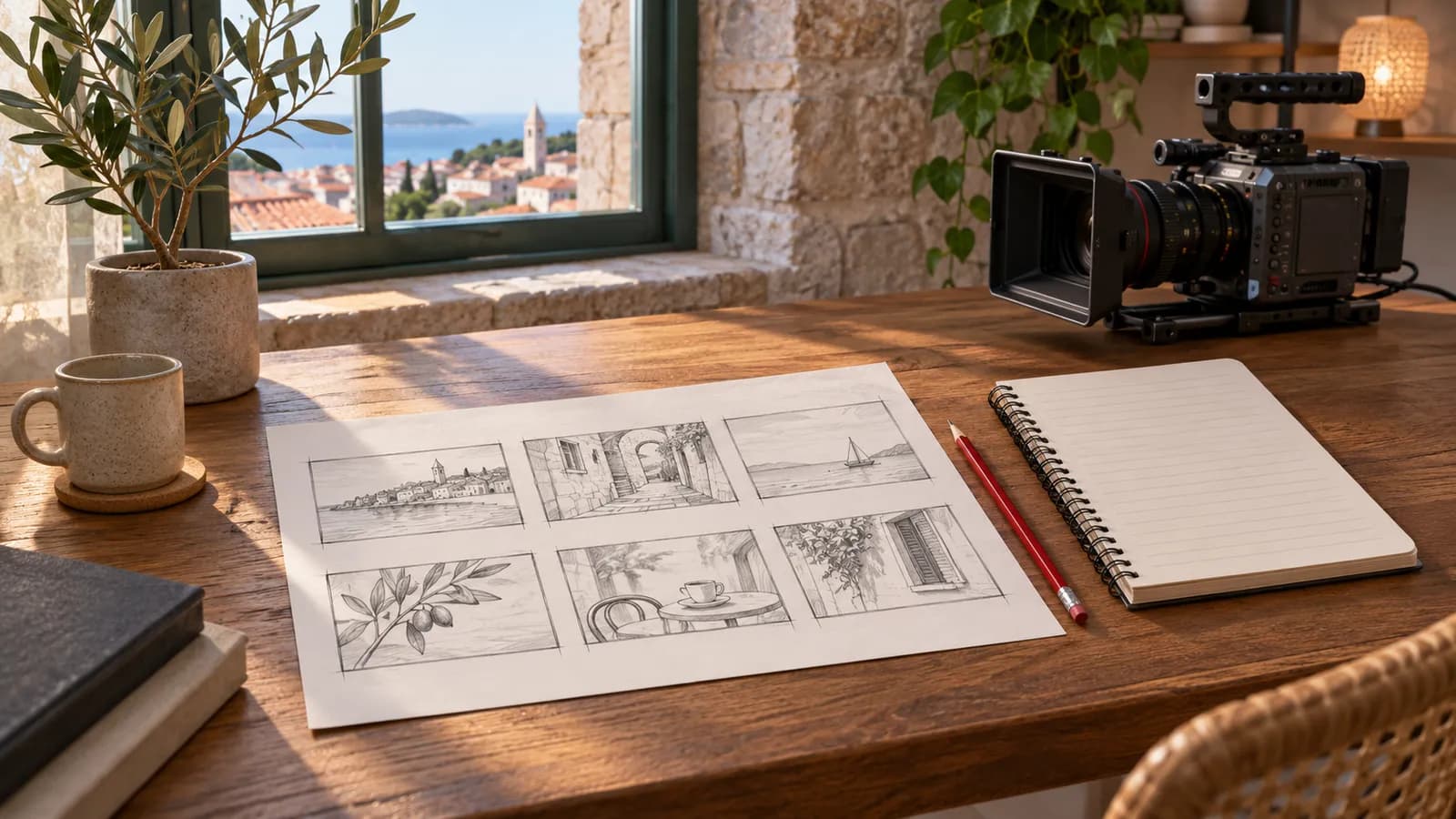
A video brief is a short agreement about why a video is being made, who it is for and what viewers should understand or do afterwards. It connects the message, audience, content, deliverables, deadline and approval process. Its value comes from resolving decisions that would otherwise be left until filming or editing.
“We need a beautiful video” can start a conversation. Preparing a shoot requires more detail. An attractive image does not automatically identify its audience, explain where it will be used or establish its message. That is why effective video production starts before the crew arrives.
Start with the outcome
Write one sentence: after watching, we want a particular audience to understand a particular point and take a next step. That step might be exploring a service, registering for an event, viewing a portfolio or making an enquiry. A process explanation needs a different approach from a short event invitation.
Consider this fictional example: “We want business event organisers to understand our venue and request a viewing.” This gives the production team more direction than asking for an energetic video. It suggests showing the space, how it is used and a clear way to get in touch.
Choose one main objective. Supporting information can help, but each additional priority takes time and attention from the viewer.
Explain who will watch
Describe the audience and what they already know. A new customer may need an introduction to the service. An existing partner may need a specific detail or evidence that an approach suits their project.
Write down the question viewers are likely to bring: how does this work, is it suitable, where does it happen or how do I enquire? That question helps guide interview topics, examples and the order of information. If audience data is unavailable, distinguish what is known from what is assumed rather than inventing a detailed profile.
Connect one message to something visible
Try writing the central message without superlatives. “Fast, excellent service” does not tell the crew what to film. A concrete description of a process can be connected to an action, person, location or result that is genuinely available on the day.
For each important claim, ask whether it can be shown and whether it is accurate. An unverified number should not enter a script as a fact. Relevant activity, a participant’s explanation and meaningful details can carry a story without invented statistics.
Once the message is clear, it becomes easier to decide which shots belong. This connects with editing and framing: every cut needs a reason.
Agree on deliverables before filming
“A video for the internet” leaves too many decisions open. Specify the channels, approximate duration, languages and versions. Distinguish the main film from shorter extracts and separate teasers. If captions are required, agree whether they should be embedded in the picture, supplied as a separate file or both.
One possible scope is a horizontal main film for a website and two shorter vertical versions for social channels. This is an example, not a standard package. Exact dimensions, lengths and delivery requirements should be checked for the chosen channel when the assets are delivered.
Aspect ratios affect composition. An important detail near the edge of a horizontal image may disappear in a vertical crop. Allow for reframing, graphics and captions during the shoot rather than relying on the edit to solve every composition problem.
Turn the brief into a practical shooting plan
The brief defines the purpose and boundaries. A script or interview plan develops the content. A shot list identifies the material to capture, while a schedule connects people, locations and time. These documents can be short, but they serve different purposes.
Adobe’s shot-list guide explains how planning coverage and camera setups helps organise filming. For an interview, prepare supporting scenes connected to the subject instead of searching for unrelated cutaways afterwards. The University of Hull’s pre-production guide also starts with the story, viewers and the material needed to communicate it.
In the fictional venue example, useful scenes might include arrival, the entrance, room layout, staff preparations and details an organiser needs to assess. The plan gives the crew direction while preserving room for real activity and unexpected opportunities.
Include location, people and sound
Confirm who will attend, how long they are available and who can authorise access to the location. Identify filming restrictions, sensitive information and materials whose use requires permission. Raise these questions with the responsible people during preparation.
A location can look excellent and still be unsuitable for an interview because of traffic, ventilation or background music. Include time to assess sound and change the setup if necessary. For more context, read why ambience and silence matter to a story.
Set dates and a clear approval process
Separate the filming date, first edit and final delivery. Allow time to collect logos, translations, consolidated comments and necessary approvals. A publication deadline alone does not explain how much preparation time is available.
Identify one person who consolidates feedback and the person who approves the final version. Agree on revision rounds and what happens if the message or scope changes after filming. A change may be justified, but it should be assessed for additional shooting, editing or schedule implications.
A video brief template for the first conversation
Copy these questions and answer them briefly:
- What are we presenting, and why are we making the video now?
- Who is the audience, and what is the main objective?
- What single message should viewers remember?
- What can we genuinely show, and who can participate?
- Where will the video appear, and which versions are needed?
- Which languages, captions, logos and existing assets are required?
- Which locations, dates and restrictions are already known?
- What is the budget range, and which elements take priority?
- When are the first edit and final delivery needed?
- Who consolidates feedback, and who approves?
You do not need every answer before the first conversation. The brief helps make open questions visible so they can be resolved before affecting the shoot.
Have an idea for a video? Contact Unlimited Crew with your objective, audience and intended deadline. These details provide a useful starting point for discussing a realistic scope and filming approach.