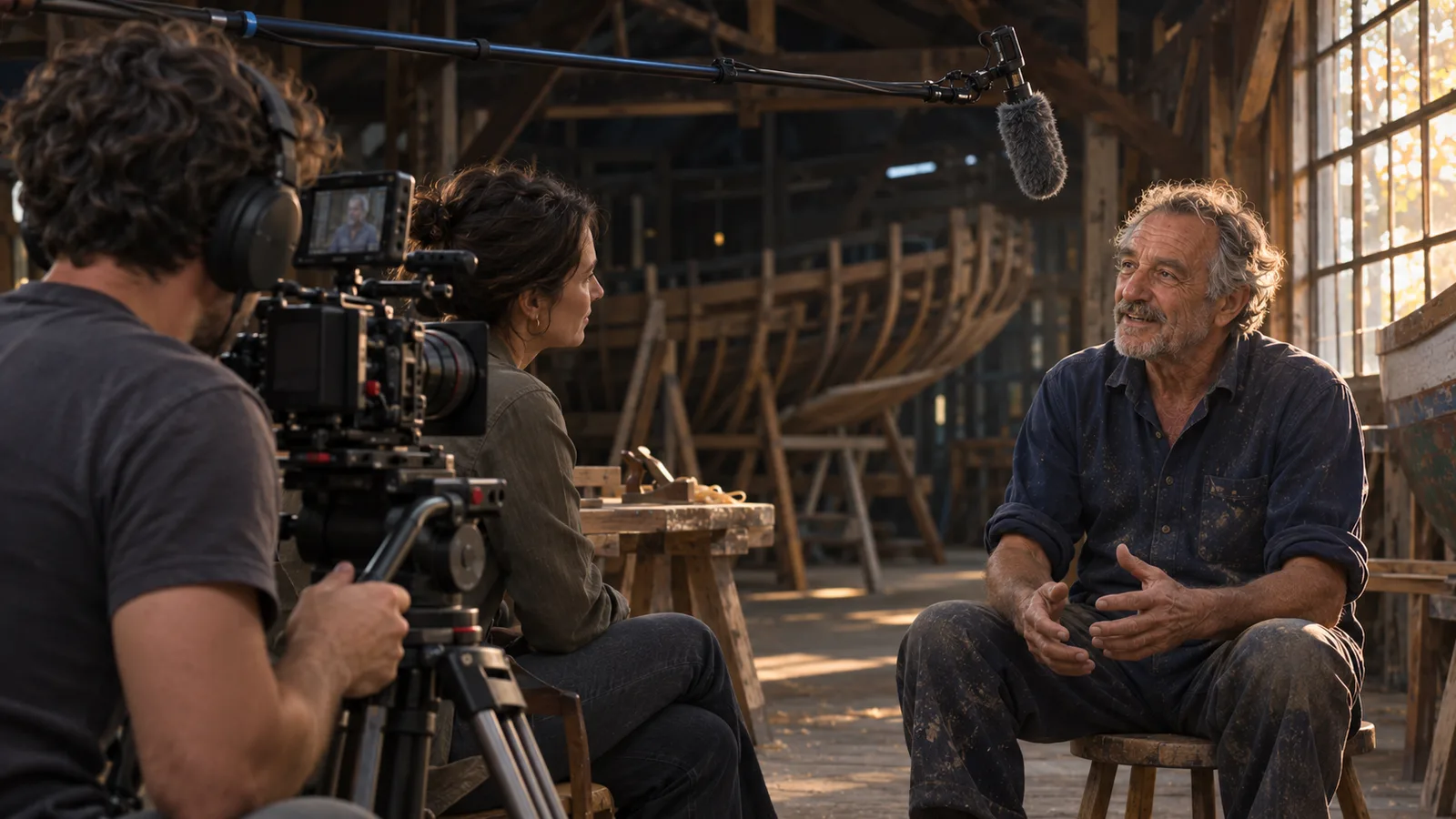
The promotional film is finished. The location looks good, people have room in the frame, and details connect the story. Then another request arrives: “Can we also have a vertical version for social media?” Some shots adapt easily. In others, the crop removes hands, a product, or a person taking part in the conversation.
Plan for horizontal and vertical video before arriving on location. The same footage can serve both formats when the important elements remain visible after reframing. Sometimes a different arrangement within the shot is enough. Sometimes an additional take is the better choice.
A different aspect ratio changes what the viewer sees
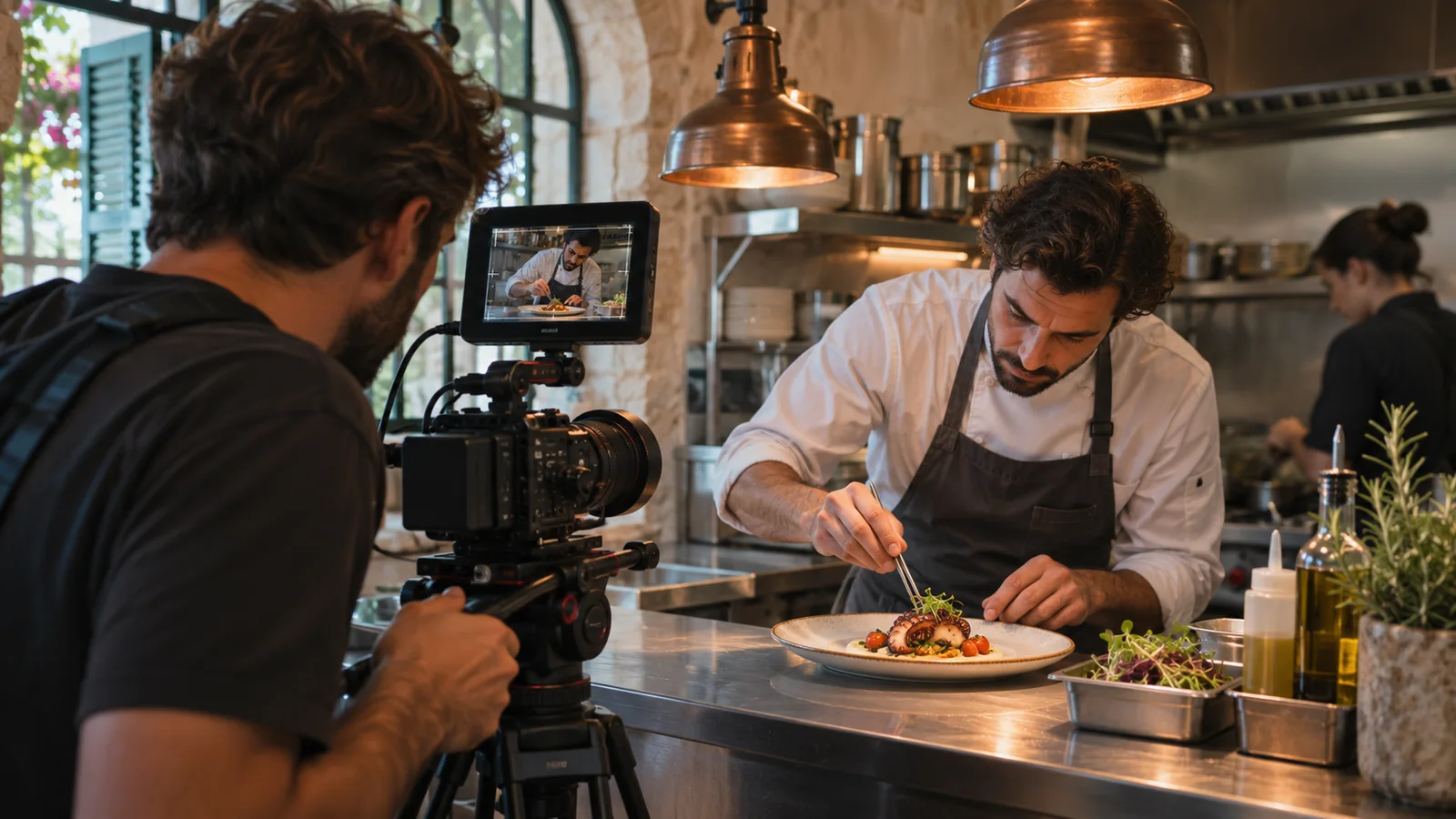
A horizontal shot can connect a person with their surroundings: a chef with a kitchen, a musician with an audience, or an employee with colleagues. A vertical crop can remove that relationship. The face remains visible, but the viewer may no longer understand what the person is doing or who they are addressing.
Before adapting a shot, identify what gives it meaning. If cooperation between two people matters, a crop that keeps only one changes the message. If the subject is a dish, preserving the chef’s face while losing the plate misses the point. The viewer needs the elements that made the shot worth including.
Our broader guide to social media video covers channels and content choices. This article addresses a narrower production question: how do you capture footage that remains useful in different frame shapes?
How much of a horizontal shot survives?
Consider footage measuring 3840 × 2160 pixels, with a 16:9 aspect ratio. To fill a 9:16 vertical frame while keeping the full source height and leaving no empty borders, the crop is approximately 1215 pixels wide. That is about 32 percent of the original width.
This is a geometry example, not a verdict on every video’s image quality. The crop can contain enough pixels for a 1080 × 1920 delivery. However, stabilisation, further enlargement, focus, and source quality can reduce the available margin. Higher resolution cannot restore content outside the chosen crop.
If a face and a product sit at opposite sides of the horizontal frame, additional pixels will not bring them closer together. That problem needs a different composition or another shot.
Agree on where the video will appear before filming
List the required versions in the video brief: a horizontal film for the website, a vertical video for mobile viewing, or additional versions for a specific advertisement. Include each version’s message, approximate duration, and essential on-screen text.
A 9:16 frame is a common choice for full-screen portrait viewing, but check the chosen channel’s requirements. For example, YouTube’s official documentation allows square Shorts too. A platform name and an aspect ratio are not interchangeable instructions.
Also agree which version takes priority when a shot cannot work equally well in both shapes. That decision helps the team plan time, subject positions, and additional coverage.
Check the central crop without forcing everything into the centre
Vertical framing guides on the monitor can reveal a problem before filming continues. Check whether faces, hands, and the object in use remain inside the intended frame. For movement, examine the whole action rather than only the starting position.
Trying to make every shot universal can weaken the horizontal version. People become crowded into the middle, while the setting loses its purpose. Some wide shots are valuable precisely because they show relationships between elements that are far apart.
Keep those shots for the version they serve. Capture a different shot that communicates the same idea clearly in the vertical version. A meaningful composition matters more than using every recording everywhere. The same principle underlies our guide to editing and framing: every cut needs a reason.
When is an additional vertical take worthwhile?
Imagine planning a promotional shoot for a restaurant. This is a planning example, not an account of a particular client project. A horizontal shot establishes the kitchen and the team working together. A separate vertical shot could connect the chef’s hands and the plate naturally within a narrower frame.
Additional coverage is especially helpful when essential parts of the action are too far apart, when someone moves outside the planned crop, or when there is insufficient room for headings and captions. If an action can be repeated safely, a short additional take may be more useful than an elaborate post-production fix.
For an unrepeatable event, decide priorities and crew positions in advance. Every moment cannot be covered perfectly for every format at once. The plan should also respect the people working at or attending the event, so filming does not interfere with their activities.
Automatic reframing helps, but the result needs review
Subject-tracking tools can speed up adaptations of horizontal footage. Adobe’s Auto Reframe documentation describes aspect-ratio changes and notes that complex shots with multiple points of interest or rapid movement may need manual adjustments.
Review more than the face. Are the hands still visible? Does the crop follow the person speaking? Does the product remain on screen long enough? Does the moving crop feel calm, or does it distract from the action?
For B-roll, the supporting shots that complement the main action, choosing another shot is often more effective than forcing an unsuitable crop. A tool can help reposition the frame. The editor still decides what the story needs to show.
Check captions and graphics in each version
A heading that reads comfortably in a horizontal frame can occupy too much space in a vertical one. After changing the format, review line breaks, text size, and the relationship between text and the face or product.
Allow for buttons, post descriptions, and other interface elements on the chosen platform. Their positions depend on the viewing context and post type. Check the final video in the current post or advertising preview on a phone rather than relying on one supposedly universal safe area.
Before delivery, watch both versions from beginning to end. Each should communicate its message independently, keep text readable, and preserve the important parts of the action. If a shot cannot do that, replace it with a more suitable one.
For the next shoot, start with a clear list of deliverables and a few essential shots for each. If you need a website film and social content, send us the objective and intended publishing channels. The required formats can then become part of the filming plan from the beginning.